The demo is always beautiful. Someone types a sentence, an agent whirs, and a week of work appears in ninety seconds. Everyone in the room does the arithmetic in their head: the salaries, the time, the sheer leverage. And nobody does the other arithmetic, the one that shows up on the invoice at the end of the month. There is always another arithmetic. The demo is where you learn what a thing can do. The bill is where you learn what it costs to do it all day, every day, at the volume your business actually runs at.
I keep coming back to a homelier machine to think about this: the manual transmission.
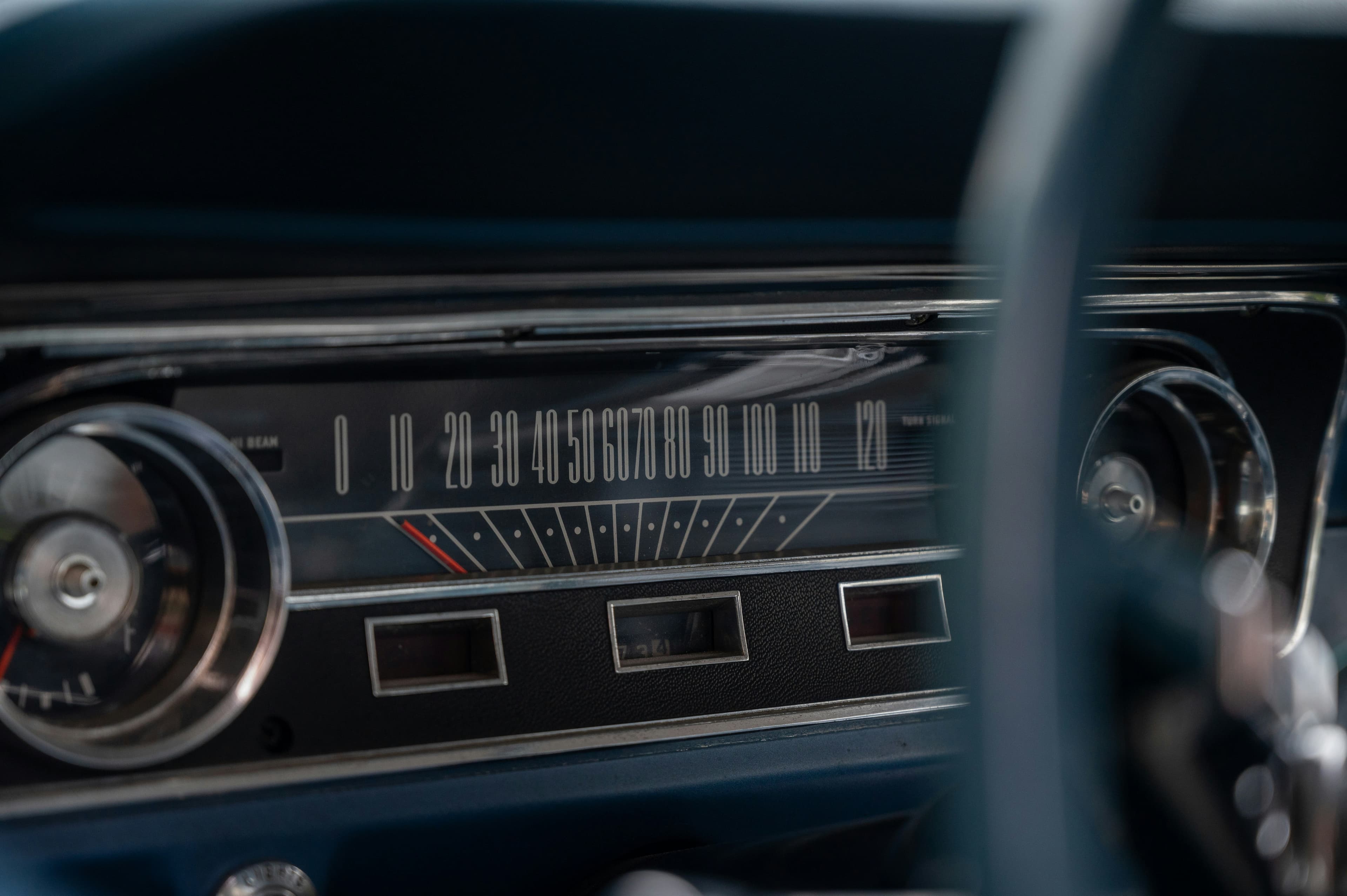
Anyone who has driven a stick knows there is a right band to live in. There's a range on the tachometer, call it the middle of the dial, where the engine is doing its work economically, pulling the car forward without complaint. Drop below it and you lug the engine: you're in too high a gear for the speed, the whole car shudders, and you're grinding away the parts that keep you moving without actually getting anywhere. Climb above it and you redline: the needle buries itself, the engine screams, you burn fuel by the fistful and cook the components for a few seconds of thrill you didn't need. Both feel like effort. Only one is progress.
Running agents at scale is driving that manual, and most teams are doing it with their eyes off the tach.
Redlining, in this world, is the team that throws the largest model at every task because the largest model is the most impressive: summarizing a two-line email with an engine built to reason about theorems. It works. It always works. That's the trap. It works and it costs ten times what the job was worth, and because each individual call is pennies, nobody notices until the pennies have become a number with a comma in it.
Lugging is the opposite sin, and quieter. It's the team so frightened of the bill that they under-power everything, routing real reasoning problems to a model that can't hold them, then paying anyway: in retries, in bad output that a human has to catch and redo, in the slow erosion of trust when the system is wrong just often enough to need checking every time. Cheap per call. Expensive per outcome. The engine is shuddering and you're telling yourself it's fine because the fuel gauge looks great.
Finding the band is a skill, and it's the one that separates people who operate AI from people who merely invoke it. Match the model to the task. Reserve the big engine for the climbs that genuinely need it and let the small one handle the flats, which are most of the road. Watch the equivalent of the tach: your cost per successful outcome, not your cost per call, because the call is not the point. The outcome is the point.
None of this is glamorous. Nobody gives a keynote about right-sizing. But this is the part of the work that decides whether AI is a line item that pays for itself or a leak in the hull that everyone admires while it sinks the ship.
The demo teaches you the car is fast. Living with the car teaches you the throttle. Learn the throttle.